

Memorial Lecture on Genetic Disease Research
About Donald Wassenberg
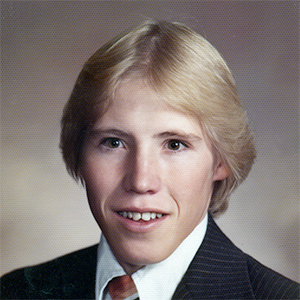
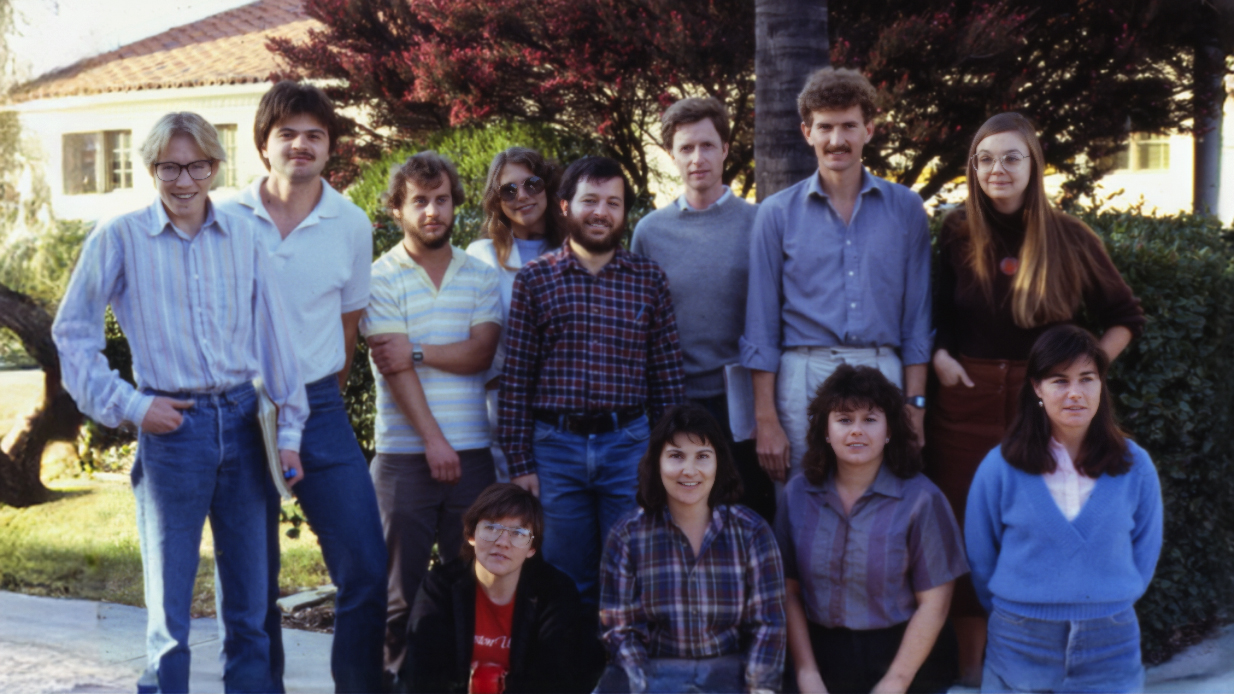
This lecture is dedicated to the memory of Donald “Buzz” Wassenberg, a Master’s degree candidate at San Diego State University at the time of his death in 1986. He died of cystic fibrosis at the age of 26. Buzz was an outstanding individual, both personally and professionally. He displayed an enthusiasm about life that was not dampened by the severe medical problems he faced. His approach to science was innovative and generated excitement regarding new experimental ideas and results.
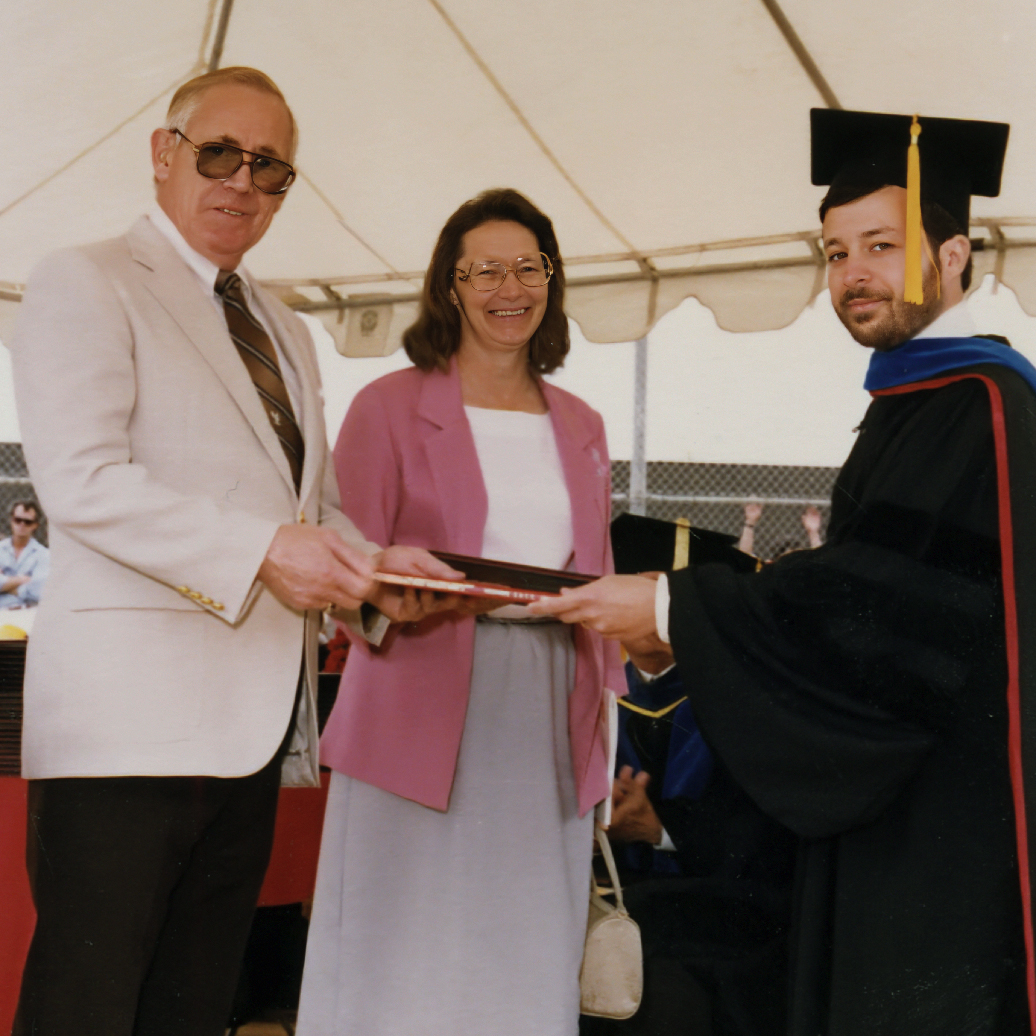
Buzz had completed his laboratory research in Dr. Sandy Bernstein’s laboratory and had begun writing his thesis before his death. SDSU awarded his Master’s degree posthumously at the spring 1987 graduation, where Dr. Bernstein presented the completed thesis and the degree to Buzz’s parents. This research was subsequently published in the Journal of Biological Chemistry. We have begun an endowment fund to honor his memory and inspire his peers and colleagues. This allows us to bring top investigators to SDSU to present recent advances in genetic disease research.
Dear Friends,
We need help maintaining an endowment fund for this seminar series. Please take a moment to donate online or send a check to:
The Campanile Foundation
Manchester Hall
San Diego State University
5500 Campanile Drive
San Diego CA 92182-8035
Checks should be payable to the Campanile Foundation and marked for the Wassenberg Lecture Series. Alternatively, you can give Dr. Sandy Bernstein funds to deposit into the account.
Recent Lecture

Title
Human Endogenous Retroviruses and their Relationship to Disease
Date
November 5, 2026, 4pm
Speaker
Erica Ollmann Saphire, Ph.D., MBA
Professor, President and Chief Executive Officer
La Jolla Institute for Immunology
Host
Dr. Tom Huxford
Chair, Chemistry and Biochemistry
Location
Donald P. Shiley BioScience Center
Gold Auditorium
Speakers
Erica Ollmann Saphire, Ph.D., MBA
Professor, President and Chief Executive Officer
La Jolla Institute for Immunology
Human Endogenous Retroviruses and their Relationship to Disease
The Ollmann Saphire Laboratory is driven by a commitment to transform the understanding of emerging infectious diseases and accelerate the development of vaccines and therapeutics. By integrating cryo-electron microscopy, cryo-electron tomography, X-ray crystallography, virology, immunology, biochemistry, and biophysics to understand the dynamic interface between host and pathogen, they have delivered landmark structural insights into viral envelope glycoproteins from Ebola, Marburg, Bundibugyo, Lassa, rabies virus, herpesviruses like CMV, and Human Endogenous Retroviruses, revealing how these pathogens enter cells, evade immunity, and can be targeted by medical countermeasures.
The group’s impact extends beyond the laboratory bench. Through leadership of international research consortia and rapid-response scientific networks, they helped establish and coordinate antibody discovery, characterization, and data-sharing pipelines that accelerated countermeasure development during outbreaks of Ebola, Lassa fever, and SARS-CoV-2. These collaborative efforts have enabled scientists around the world to move faster from discovery to intervention.
Stanley T. Crooke, M.D., Ph.D.
Founder, Chairman and CEO of n-Lorem Foundation
Watch Dr. Crooke’s Talk
Responding to Patients with Pathogenic Nano-Rare Mutations: The n-Lorem Approach and Experience
Stanley T. Crooke, M.D., Ph.D. is founder, chairman and CEO of n-Lorem Foundation, a nonprofit focused on discovery, developing and providing personalized, experimental treatments for nano-rare patients (1 to 30 patients worldwide).
Prior, Dr. Crooke founded, was Chairman, CEO and Lead Scientist of Ionis Pharmaceuticals, where he led the scientific development of a new platform for drug discovery, antisense oligonucleotide (ASO) technology and the creation of one of the largest development pipelines in the biotechnology industry.
Dr. Crooke has received numerous awards, including the Indiana University School of Medicine Steven C. Beering Award, the Prix Galien Roy Vagelos Pro Bono Humanum Award, the ACS E.B. Hershberg Award, the Lifetime Achievement Award from the Oligonucleotide Therapeutics Society, the Scrip Lifetime Achievement Award, and the 2019 Massry Prize.
He received his M.D. and Ph.D. from Baylor College of Medicine, where he serves on the Board of Advisors. He has published 600+ scientific papers, edited 20+ books, holds numerous patents, and led development of 23+ commercialized drugs.
Eric Olson, Ph.D.
Professor and Founding Chair of the Department of Molecular Biology
UT Southwestern Medical Center
Profile
Watch Dr. Olson’s Talk
Skeletal and Cardiac Muscle Development and Genetic Disease Therapy
Olson directs the Hamon Center for Regenerative Science and Medicine and the Wellstone Center for Muscular Dystrophy Research. His lab discovered key regulators of muscle development (myogenin, MEF2, Myomaker, Myomixer, Hand factors, myocardin) and stress-response pathways. His latest work uses CRISPR to correct Duchenne muscular dystrophy. He’s published 600+ articles (200K+ citations), is a member of NAS, NAM, AAAS, and co-founded multiple biotech firms.
Diana Bautista, Ph.D.
Professor & Head, Division of Cell Biology, Developmental Biology & Physiology
UC Berkeley
Profile
Watch Dr. Bautista’s Talk
Peripheral Neuroimmune Signaling in Eczema
Dr. Bautista studies neuroimmune interactions in chronic pain, itch, and airway inflammation, focusing on TRPA1 and TRPM8 sensory ion channels. She’s an HHMI Investigator, Pew Scholar, NIH Director’s Transformative Research Awardee, and a leader in DEI mentorship.
Nancy Bonini, Ph.D.
Florence R.C. Murray Professor, Biology
University of Pennsylvania
Profile
Watch Dr. Bonini’s Talk
Drosophila as a Model for Human Neurodegenerative Disease
Bonini uses Drosophila to uncover mechanisms of neurodegenerative diseases. Her pioneering work earned her NAS, NAM, AAAS membership, Packard and Merck awards, and HHMI Investigator status.
Paul Turner, Ph.D.
Rachel Carson Professor of Ecology & Evolutionary Biology
Yale University
Profile
Watch Dr. Turner’s Talk
Phage Therapy for CF Patients
Turner researches virus evolution and phage therapy for antibiotic-resistant infections in cystic fibrosis. He’s active in STEM outreach, served on NSF and society boards, and is a NAS fellow.
Madelon Maurice, Ph.D.
Professor of Molecular Cell Biology
UMC Utrecht, The Netherlands
Profile
Watch Dr. Maurice’s Talk
Mechanisms of Wnt Pathway Tumor Suppressor Mutations
Maurice uncovered how Wnt signaling misregulation drives cancer. Her work earned ERC and NWO VICI grants and Oncode Institute membership.
Leslie Leinwand, Ph.D.
Distinguished Professor of MCDB & CSO, BioFrontiers
Colorado Boulder
Profile
Diseases Caused by Myosin Mutations
Leinwand studies cardiomyopathies and gender/diet effects on heart disease. She’s Fellow of AAAS, NIH MERIT awardee, AHA Established Investigator, NAS and National Academy for Inventors member.
Paul Negulescu, Ph.D.
SVP, Research & SD Site Head
Vertex Pharmaceuticals
Profile
Can We Fix the Broken Protein in CF?
Negulescu led development of Kalydeco (2012) and Orkambi (2015). Under his leadership, Vertex’s SD site generated multiple approved therapies for cystic fibrosis.
Joseph C. Wu, M.D., Ph.D.
Director, Stanford Cardiovascular Institute
Stanford University
Profile
Cardiac iPSCs for Precision Medicine
Wu’s lab uses iPSCs and molecular imaging to model cardiovascular disease and develop gene/cell therapies. Awards include NIH New Innovator and Presidential Early Career Award.
Forest Rohwer, Ph.D.
Department of Biology, SDSU
Profile
Personalized Medicine Platform for CF
Rohwer pioneered “viromics” to profile viral diversity. Applied to CF lungs, his work reveals overlooked microbes and informs personalized treatment. Published >150 articles; 2008 ISME Young Investigator; author of two books.
John M. Carethers, M.D.
John G. Searle Professor & Chair, Internal Medicine
University of Michigan
Profile
DNA Mismatch Repair and Hereditary Colorectal Cancer
Carethers researches tumor genetics, DNA repair, and colorectal cancer disparities. He’s IOM member, Senior Associate Editor of “Gastroenterology,” and NIH-funded investigator with 100+ publications.
Mario R. Capecchi, Ph.D.
Dept of Human Genetics
University of Utah
Profile
Gene Targeting into the 21st Century
Capecchi developed ES cell gene targeting, revolutionizing mouse models of human disease. Nobel Laureate; research in neural development, gene therapy, and genomic rearrangements.
Nigel G. Laing, Ph.D.
Head of Neuromuscular Diseases
Centre for Medical Research, UWA
Profile
Next-Gen DNA Sequencing: Gene Discovery & Diagnostics
Laing identified 20+ neuromuscular disease genes. His lab advanced molecular neurogenetics diagnostics, including nemaline myopathy and distal myopathy.
K. David Becker, Ph.D.
Sr Director, Lab Ops
Helix, San Diego
Profile
Translational Science, Clinical Medicine & Personal Genomics
Becker led clinical lab and FDA affairs at Pathway Genomics. His research spans muscle disease models and Alzheimer’s genomics.
Albert La Spada, M.D., Ph.D.
Head, Genetics
UCSD School of Medicine
Profile
Dynamic Mutation & Neurodegenerative Repeat Expansion Disorders
La Spada’s lab studies molecular pathology of SCAs and Kennedy’s disease using model organisms to develop therapies. Funded by NIH, HHMI, and MDA.
Atul Butte, M.D., Ph.D.
Professor, UCSF School of Medicine
Exploring Genomic Medicine Using Translational Bioinformatics
Butte’s lab develops computational approaches to integrate clinical EHR data with gene expression. He founded Genstruct, and has published extensively in Nature-group journals.
Garry P. Nolan, Ph.D.
Professor of Microbiology & Immunology
Stanford University
Profile
Phospho-Biosignatures and Disease
Nolan’s group pioneered single-cell proteomics and engineered viral cloning systems. Recipient of Stohlman Scholar Award and Burroughs Wellcome Award; founded multiple biotech companies.
Jeffrey Robbins, Ph.D.
Exec Co-Director, The Heart Institute
Cincinnati Children’s Hospital
Profile
Progenitor Cell Populations: the Birth of a Cardiac Syndrome
Robbins studies genetic, cell biological, and protein-level mechanisms of cardiac disease. AHA MERIT awardee and Presidential Award for Research from ISHR; 160+ publications.
Jeffrey S. Chamberlain, Ph.D.
Director, Wellstone MD Cooperative Research Center
Univ of Washington
Profile
Development of Gene Therapy for the Muscular Dystrophies
Chamberlain’s lab develops gene/cell therapies for muscular dystrophy. NIH MERIT award recipient; editorial boards, and >160 publications in Nature/Science journals.
Andrew D. McCulloch, Ph.D.
Distinguished Professor of Bioengineering
UC San Diego
Profile
Cardiac Systems Biology
McCulloch uses experimental/computational models to study cardiac muscle structure–function relationships and arrhythmia. NSF Young Investigator and AIMBE Fellow; co-founded Insilicomed.
Christine E. Seidman, M.D.
Professor & Director, Cardiovascular Genetics Center
Brigham & Women’s Hospital/Harvard Medical School
Profile
Genetic Causes of Cardiac Hypertrophy
Seidman’s research on cardiomyopathies has defined the genetic basis for human heart disease. Bristol-Myers Squibb Awardee; 200+ publications; NAS and IOM member.
Stuart H. Orkin, M.D.
Chair, Pediatric Oncology & Professor of Pediatrics
Dana-Farber/Harvard Medical School
Profile
Genetic Control of Blood Cell Development
Orkin defined hematopoietic transcriptional regulators. HHMI Investigator; NAS and IOM member; editorial boards; 300+ primary research articles.
Jean Y. J. Wang, Ph.D.
Professor of Medicine & Associate Director, Basic Research
Moores UCSD Cancer Center
Profile
Exploiting an Intrinsic Vulnerability of Uncontrolled Proliferation in Cancer
Wang’s work on proto-oncogenes and signaling networks under genotoxic stress revealed new cancer gene interactions and therapeutic targets. Jane Coffin Childs Fellow; Searle Scholar; 100+ publications.
Phyllis I. Gardner, M.D.
Professor of Medicine & Clinical Pharmacology
Stanford School of Medicine
The Evolving Impact of the Genomic Revolution on Molecular Diagnostics and Therapies
Gardner’s research on ion channel signaling includes CF chloride channels. Founder of Genomics Collaborative, CambriaTech, Xeragen. Board member of biotech firms; Harvard Med graduate.
Theodore Friedmann, M.D.
Prof of Pediatrics & Chair of Biomedical Ethics
UC San Diego School of Medicine
Progress Toward Human Gene Therapy: Technology, Policy and Ethics
Friedmann pioneered human gene therapy protocols. Director of UCSD Human Gene Therapy Program; member of NIH ethics committees; Muriel Jeannette Whitehill Chair.
Richard Kolodner, Ph.D.
Prof of Medicine & Head, Cancer Genetics
Ludwig Institute/UC San Diego
Profile
Mutator Genes, Genome Instability and Cancer Susceptibility
Kolodner elucidated DNA repair and recombination mechanisms in yeast and mammals, defining their roles in cancer. Former Harvard faculty; associate editor of Cell; NAS member.
Neal D. Epstein, M.D., Ph.D.
Chief, Molecular Physiology Section
NIH NHLBI, Bethesda
Of Flies and Men: Lessons from Hypertrophic Cardiomyopathy
Epstein studies molecular physiology of cardiomyopathies, translating insights from model organisms to human disease. Recipient of PHS Outstanding Service Medal.
Owen N. Witte, M.D.
Director, Broad Center for Regenerative Medicine & Stem Cell Research
UCLA
Profile
Lymphocyte Signal Transduction through Bruton’s Tyrosine Kinase
Witte discovered the role of Btk in immune development. HHMI Investigator; National Academy of Sciences member.
Philip C. Hanawalt, Ph.D.
Professor of Biology & Dermatology
Stanford University
Transcription-Coupled DNA Repair & Human Disease
Hanawalt discovered transcription-coupled repair pathways, explaining DNA repair defects in xeroderma pigmentosum. NAS member; editorial boards of Science and six other journals.
David S. Bredt, M.D., Ph.D.
Global Head, Neuroscience Discovery
Johnson & Johnson, San Diego
Nitric Oxide Synthase and Duchenne Muscular Dystrophy
Bredt characterized nNOS roles in neuromuscular disease and Alzheimer’s research. Led neuroscience at Eli Lilly and J&J; AAM and AAAS fellow.
Roger W. Wiseman, Ph.D.
Lead, Molecular Carcinogenesis Group
NIEHS
Identification of BRCA1 – Promises and Paradoxes
Wiseman studies BRCA1 functions in breast/ovarian cancer susceptibility. Presented at Gordon Research Conferences and Human Genetics Congress; funded by NSF and NIH.
William B. Guggino, Ph.D.
Director, CF Research Development Program & Chair, Physiology
Johns Hopkins University
The Molecular Defect in CF: Can We Correct It?
Guggino characterized CFTR chloride channel defects and pioneered gene/drug therapy approaches to restore function.
Inder M. Verma, Ph.D.
ACS Professor of Molecular Biology
Salk Institute
Prospects in Human Gene Therapy
Verma developed retroviral gene-transfer vectors and defined oncogene functions, paving the way for gene therapy trials. Edited PNAS; chaired biotech advisory boards.
Henry F. Epstein, M.D.
Professor, Neuroscience & Cell Biology
UT Galveston
Genetic Advances in Human Muscle Disease
Epstein’s C. elegans work uncovered myofibril assembly and myotonic dystrophy mechanisms; co-director of Baylor Neuromuscular Disease Center.
Savio Woo, Ph.D.
Professor of Medicine & Oncology
Mt. Sinai
Molecular Genetics of PKU: From Anthropology to Gene Therapy
Woo founded Baylor’s Center for Gene Therapy; pioneered gene therapy approaches for PKU; HHMI Investigator.
Charles D. Laird, Ph.D.
Professor Emeritus of Biology
University of Washington
Applying Drosophila Chromosome Principles to Fragile-X Syndrome
Laird transitioned from insect chromosome structure to defining human FMR1 molecular pathology in Fragile-X syndrome. Supported by NSF, NIH, Kennedy Foundation.
Francis S. Collins, M.D., Ph.D.
Director, NIH
Profile
Progress in the Search for the Cystic Fibrosis Gene
Collins led identification of CFTR. HHMI Investigator; Chief of Medical Genetics at Michigan; studies neurofibromatosis and Huntington’s disease.